Can You Use a Solar Generator Every Day? Daily and 24/7 Use (2026)
Table of Contents
Affiliate disclosure: Some links on this page are affiliate links, including links to Amazon, EcoFlow and BLUETTI. If you buy through them we may earn a commission, at no extra cost to you. As an Amazon Associate we earn from qualifying purchases. This never influences our rankings or verdicts.
Yes, you can use a solar generator every day. Modern units use LiFePO4 batteries rated for 3,000 to 6,000 full cycles, so a model rated for 4,000 cycles lasts about 11 years at one full cycle a day. Daily use works when your panels replace what you use: roughly panel watts x peak sun hours x 0.75 must at least match your daily load divided by 0.85, with enough battery to cover nights and cloudy spells.
This page answers the questions people ask before relying on one daily, at a cabin, in a van, for a home office or to shave a power bill: how long it runs continuously, what happens at night and on cloudy days, what happens when the battery is full, and whether to buy more panels or more battery.
Can you use a solar generator every day without wearing it out?
Cycle ratings are the number to check. A cycle is one full discharge and recharge (two half cycles count as one). Current ratings from the makers:
| Model | Cycle rating | Years at one cycle a day |
|---|---|---|
| BLUETTI Elite 200 V2 | 6,000+ to 80% | About 16 |
| BLUETTI Apex 300 | 6,000+ to 80% | About 16 |
| EcoFlow DELTA 3 Plus | 4,000 to 80% | About 11 |
| EcoFlow DELTA Pro 3 | 4,000 to 80% | About 11 |
| Jackery Explorer 1000 v2 | 4,000 to 70% | About 11 |
"To 80%" means the battery still holds 80% of its original capacity after that many cycles; it does not die there. Jackery counts to 70%, so its figures are not directly comparable. Older NMC lithium units were rated for 500-1,000 cycles, which is why daily use used to be a bad idea; our LiFePO4 vs NMC guide explains the chemistry. Heat ages any battery faster, so keep the unit out of direct sun and give the fans room.
How long can a solar generator run continuously?
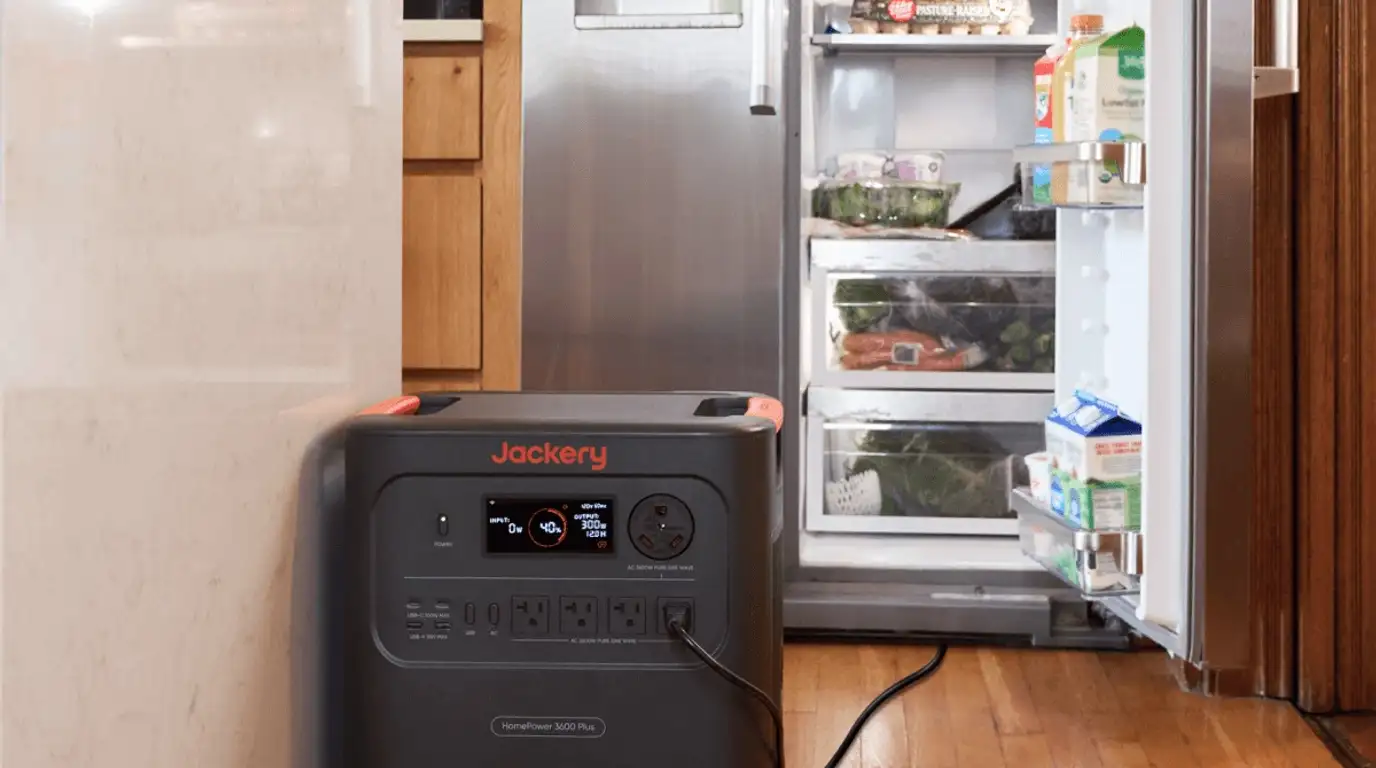
On battery alone, until the battery is empty: rated Wh x 0.85 / load. A 2,048Wh unit runs a 100W load (a router, a fridge averaging under 100W and some LEDs) for about 17 hours. With panels feeding it, it runs indefinitely as long as daily solar production covers daily use. The AC inverter also uses some power just to stay switched on (BLUETTI quotes a 10W standby draw for the Elite 200 V2), so turn the AC output off when only USB or 12V devices are plugged in.
How to size panels and battery for daily use
Work it out in three steps. Here is a typical cabin or home-office day:
| Load | Watts | Hours | Wh a day |
|---|---|---|---|
| Full-size ENERGY STAR fridge | 132-192W running, cycling | 24 | 1,500 (ENERGY STAR median) |
| Wi-Fi router | 12W | 24 | 290 |
| Laptop | 60W at most | 6 | 360 |
| LED lights | 40W | 5 | 200 |
| Total | About 2,350Wh |
- Battery draw: 2,350 / 0.85 = about 2,760Wh a day from the battery.
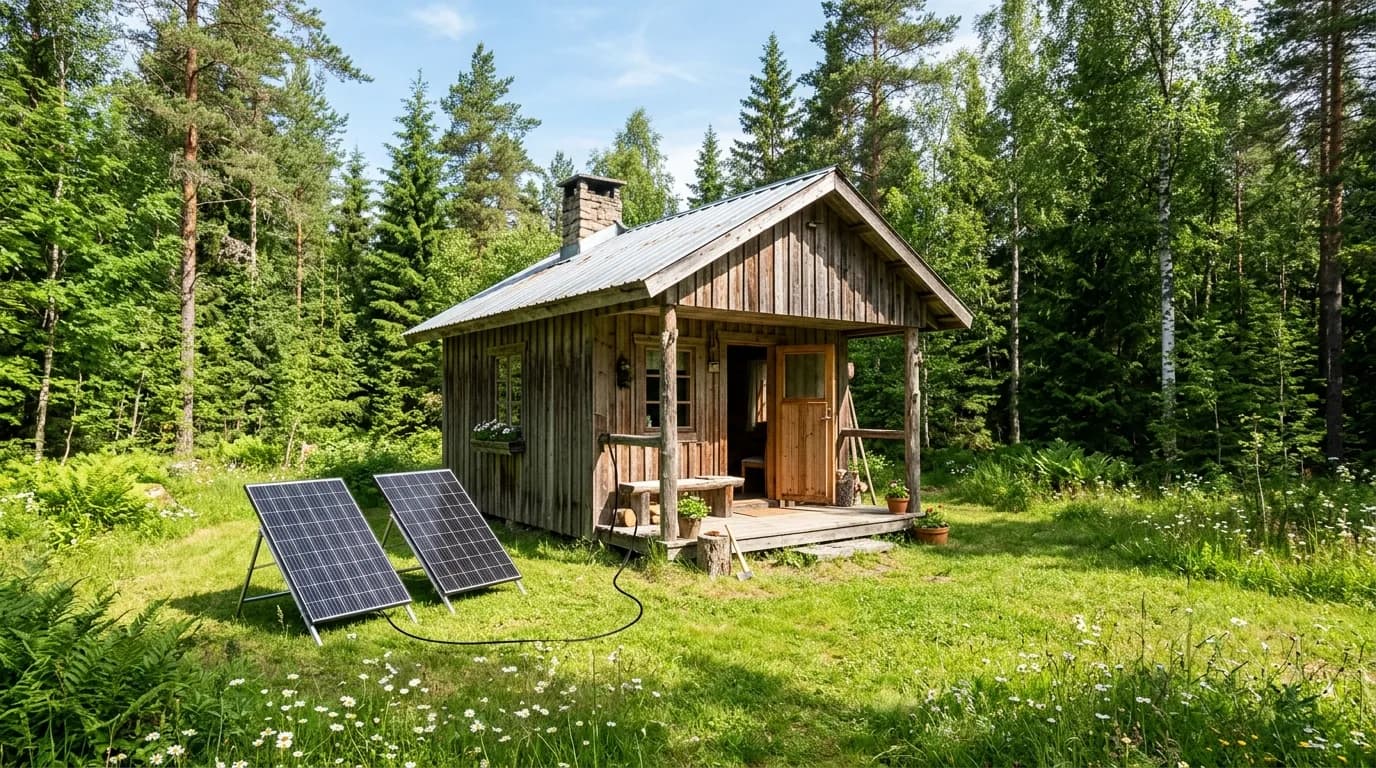
- Panels: 2,760 / (5 peak sun hours x 0.75) = about 740W of panels in a sunny location. In winter or a cloudy climate, use your area's lower sun hours; NREL's PVWatts calculator gives monthly figures for any US address.
- Battery size: one night needs about 1,400Wh for this load; two days with no sun needs about 5,600Wh. A 2-3kWh unit covers nights, and an expansion battery covers bad-weather days.
Check the unit's solar input limit before buying panels. Small units cap at 200-500W, which would not keep up with this load; a DELTA 3 Max Plus takes 1,000W and an Elite 200 V2 1,000W. Our solar panel sizing guide lists every popular model's limit.
BLUETTI Elite 200 V2Buy at BLUETTICheck price on Amazon
Do solar generators work at night?
Yes, from the battery. The panels produce nothing after dark, so everything you run at night comes out of storage, and the next day's sun has to replace it. For daily use, size the battery for at least the hours between sunset and mid-morning, when the panels start producing again.
Do solar generators work on cloudy days?
They work, but they charge much more slowly. Panels still produce under cloud from diffuse light, at a fraction of their rating that varies with how thick the cover is. The fixes are more panel watts (so a gray day still yields something useful), a bigger battery to bridge two or three gray days, and a wall or generator top-up when you have one. Our solar generator downsides page covers the weather problem in more detail.
What happens to solar power when the battery is full?
The unit's built-in charge controller simply stops drawing power from the panels, or draws only what your plugged-in devices are using. Nothing is damaged and nothing is stored; the extra sunshine is just not collected. That is why daily users run their heavy loads (the kettle, a laptop charge, a power tool) in the middle of the day when the battery is full and the panels are producing: that energy would otherwise be wasted. Most current units also support pass-through, running your devices from the input while charging; see our pass-through charging guide for which ones do it well.
Is it better to have more solar panels or more batteries?
- Buy more panels if the battery never fills by evening, or you run out during the day. Panels are cheaper per kWh over the long run, and every extra watt helps on cloudy days too.
- Buy more battery if it fills by noon but runs out overnight, or you need to ride through two or three gray days.
- Do both for off-grid living: panels sized to refill in one good day, battery sized for two to three days of use.
Panel watts are capped by the unit's solar input, and battery is capped by its expansion options, so the right unit matters as much as the ratio. The DELTA Pro 3 (2,600W solar, 12kWh per unit) and F3800 Plus (3,200W solar, 26.9kWh) leave the most room to grow.
EcoFlow DELTA Pro 3Check price on AmazonBuy at EcoFlow
Will daily use cut your electric bill?
A little, but not much. The cabin day above uses about 2.35kWh. At the US average residential price of 17.2 cents per kWh in 2025 (EIA), that is about 40 cents a day, or roughly $150 a year, against a unit and panels costing $1,000 or more. Daily use makes sense where there is no grid, or for backup you want ready anyway; it is not a bill-cutting tool on its own. Rooftop solar is, and our guide to the cheapest way to power your home compares the options.
Daily-use habits that help a solar generator last
- Keep it between about 15% and 90% when you can; many apps let you set charge and discharge limits.
- Do not charge it below about 32°F; most units block this anyway. Our cold weather guide covers winter use.
- Leave space around the vents and keep it out of direct sun.
- Turn off outputs you are not using to cut standby drain.
- Update the firmware; makers fix charging behavior that way.
For full off-grid setups, our best solar generators for off-grid cabins ranks the units built for daily cycling, and the maintenance guide covers long-term care.
Frequently Asked Questions
Can you use a solar generator every day?
Yes. LiFePO4 units are rated for 3,000-6,000 cycles, so one rated for 4,000 cycles to 80% lasts about 11 years at one full cycle a day. Daily use works when your panels replace what you use and the battery covers the nights.
How long can a solar generator run continuously?
On battery alone, about rated Wh x 0.85 / load: a 2,048Wh unit runs a 100W load for about 17 hours. With enough solar panels to replace daily use, it can run indefinitely, minus a small standby draw from the inverter.
Do solar generators work on cloudy days?
Yes, but they charge much more slowly, because panels produce only a fraction of their rating under cloud. Plan more panel watts and a battery big enough for two or three gray days, and top up from the wall when you can.
Do solar generators work at night?
Yes, from the battery. Panels produce nothing after dark, so size the battery for the hours from sunset until the panels start producing the next morning.
What happens to solar power if the battery is full?
The charge controller stops drawing from the panels or takes only what your devices use. Nothing is harmed; the extra sun is simply not collected, which is why heavy loads are best run at midday when the battery is full.
Is it better to have more solar panels or more batteries?
More panels if the battery never fills by evening; more battery if it fills by noon but runs out overnight. Off-grid setups need both: panels to refill in one good day and battery for two to three days.
Does using a solar generator every day damage the battery?
Not with LiFePO4. Daily cycling slowly reduces capacity, typically to 70-80% after 3,000-6,000 cycles depending on the model. Keeping it cool and avoiding charging below freezing helps it age slowly.