Solar Generator Downsides: 7 Real Drawbacks and Fixes (2026)
Table of Contents
Affiliate disclosure: Some links on this page are affiliate links, including links to Amazon, EcoFlow and BLUETTI. If you buy through them we may earn a commission, at no extra cost to you. As an Amazon Associate we earn from qualifying purchases. This never influences our rankings or verdicts.
Solar generator downsides start with limited stored energy: a 1,024Wh unit runs a full-size fridge for about 14 hours, while a gas generator runs as long as you have fuel. The others are slow solar recharging, output that drops in bad weather, 120V-only outlets on most models, weight, a high upfront cost per watt, and batteries that will not charge below freezing. Each has a workaround.
Most "downsides" lists stop at "they cost a lot." The useful version says what each drawback costs you in practice and which models get around it. That is what follows, with the math shown. Whether a solar generator is worth the money for your situation is a separate question, answered in our solar generator ROI guide.
Solar generator downsides: the short list
| Drawback | What it means in practice | The fix |
|---|---|---|
| Limited stored energy | 1kWh runs a full-size fridge about 14 hours | Size up, add an expansion battery, or pair with a gas generator |
| Slow solar recharge | 200W of panels adds about 750Wh on a good day | More panel watts, up to the unit's solar input limit |
| Weather and night | Clouds cut output; nothing after dark | Two to three days of battery for your essentials |
| 120V only on most units | No well pump, dryer or central AC | A 120/240V unit such as the DELTA Pro 3 or F3800 Plus |
| Weight | 2kWh units weigh 40-55 lb; 4kWh units over 100 lb | Wheeled models, or a smaller unit you will actually carry |
| Upfront cost per watt | About $500-$700 per kWh of storage | Buy for the loads you need, not the whole house |
| Cold charging | Most will not charge below about 32°F | Store indoors, or buy a self-heating model |
1. Limited stored energy: the biggest downside
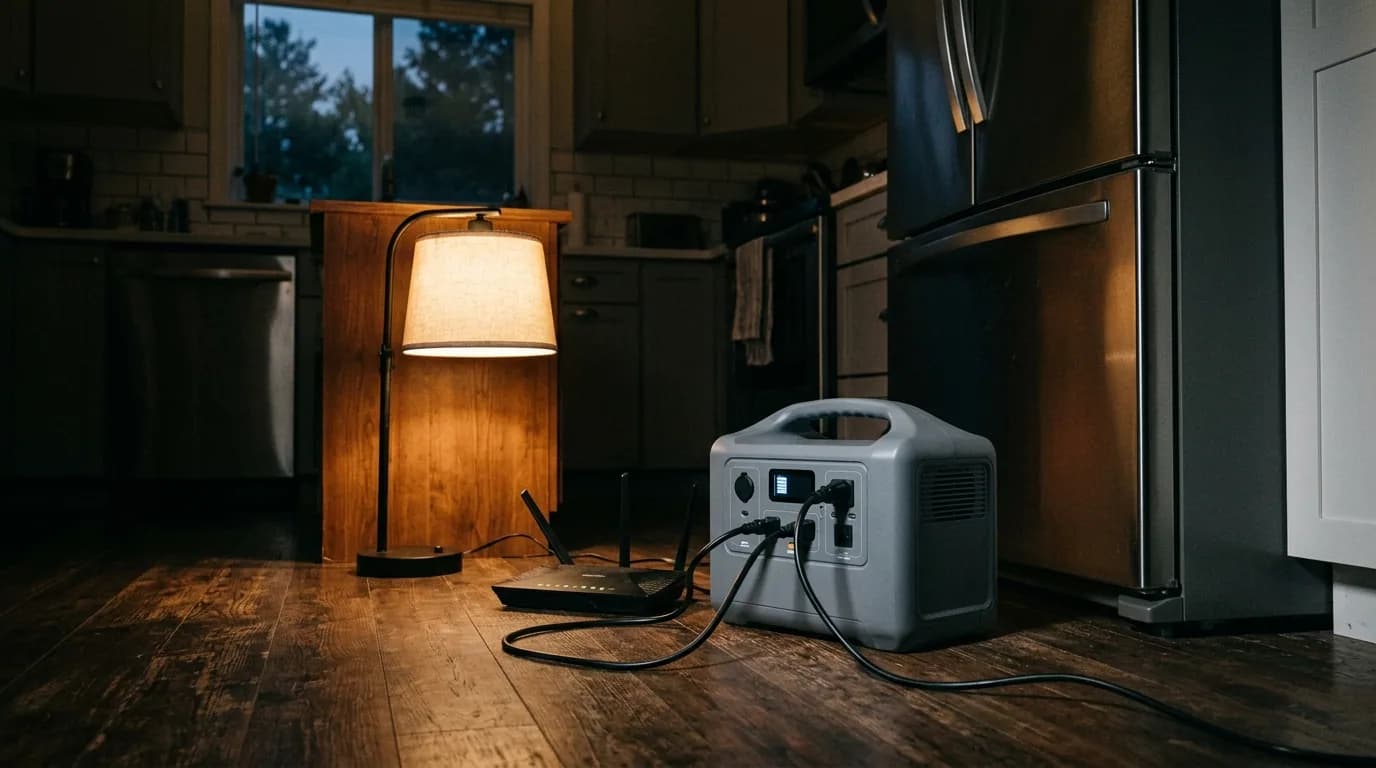
A solar generator is a battery, and a battery holds a fixed amount. Runtime is roughly rated Wh x 0.85 / load in watts, the 0.85 covering inverter losses. A full-size fridge draws about 192W while its compressor runs, but it cycles on and off, so ENERGY STAR's median certified model uses about 1,500Wh a day, an average of about 62W (see our appliance power guide):
| Capacity | Full-size fridge runtime (1,500Wh a day) | Example |
|---|---|---|
| 1,024Wh | About 14 hours | EcoFlow DELTA 3 |
| 2,048Wh | About 28 hours | Anker SOLIX C2000 Gen 2 |
| 3,072Wh | About 42 hours | EcoFlow DELTA 3 Ultra |
| 4,096Wh | About 56 hours | EcoFlow DELTA Pro 3 |
A 3,200W gas inverter generator, by contrast, keeps going as long as you refill it. That is the honest trade: unlimited runtime and fumes, or limited runtime and silence. Our solar vs gas generator comparison sets the two side by side, and the hybrid route (a battery for nights, a gas or dual-fuel generator to refill it) is what many long-outage households use.
2. Solar recharging is slow
A panel's rating is its output in full sun at a cool temperature, which it rarely sees. A fair daily planning figure is panel watts x peak sun hours x 0.75. At 5 peak sun hours:
- 100W panel: about 375Wh a day
- 200W panel: about 750Wh a day
- 400W of panels: about 1,500Wh a day
- 800W of panels: about 3,000Wh a day
So a single 200W panel refills a 2kWh unit in about three good days. The fix is more panel watts, up to the unit's solar input limit. Small units often cap at 200-500W; large home units accept 1,000-3,200W. Our solar panel sizing guide lists the limit for each popular model.
3. Weather and night: the biggest downside to solar electricity
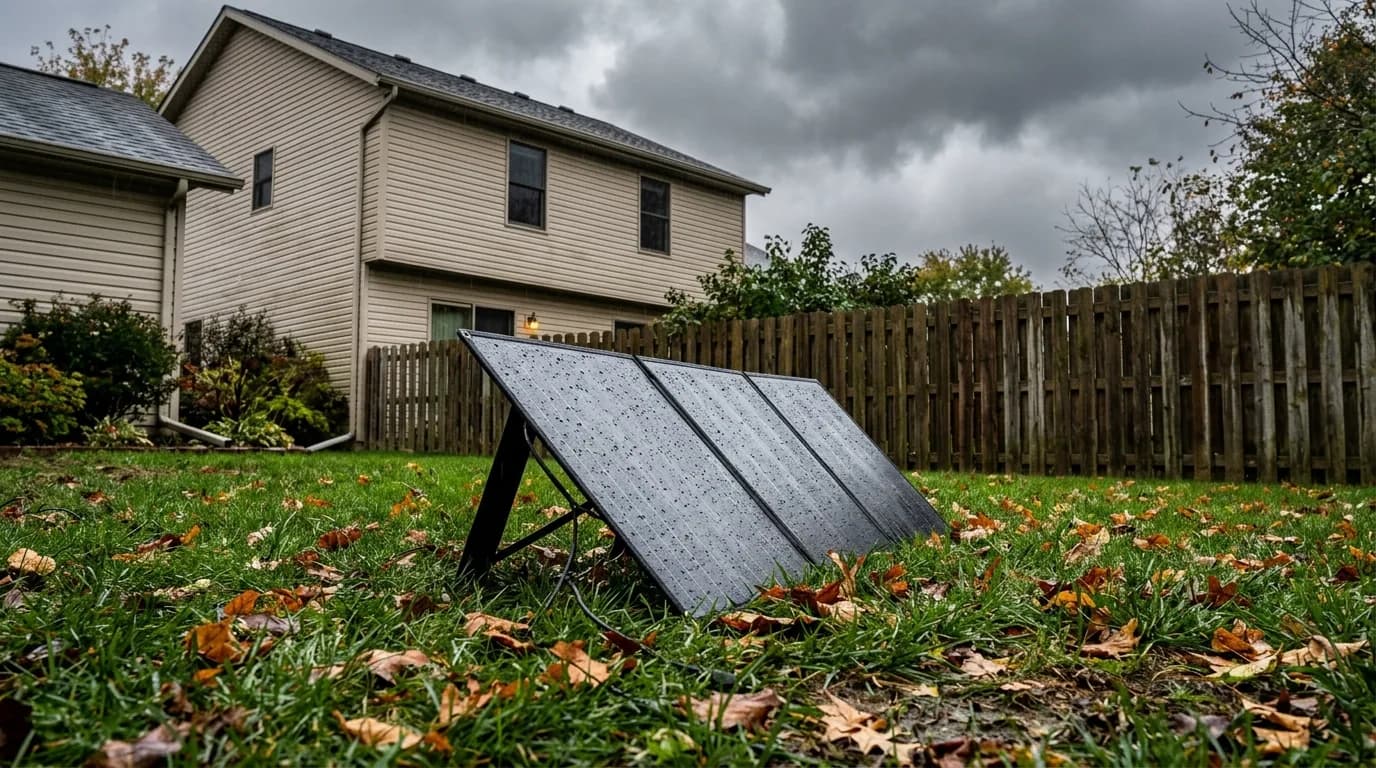
Solar's core disadvantage is that it is intermittent. Panels produce nothing at night and much less under heavy cloud, and hurricanes and winter storms, the events that cause most outages, come with exactly that weather. Production varies a lot by location and season; NREL's free PVWatts calculator estimates monthly output for your address. The practical answer is to plan two to three days of battery for your essential loads, so a run of gray days does not leave you dark.
4. Most units are 120V only
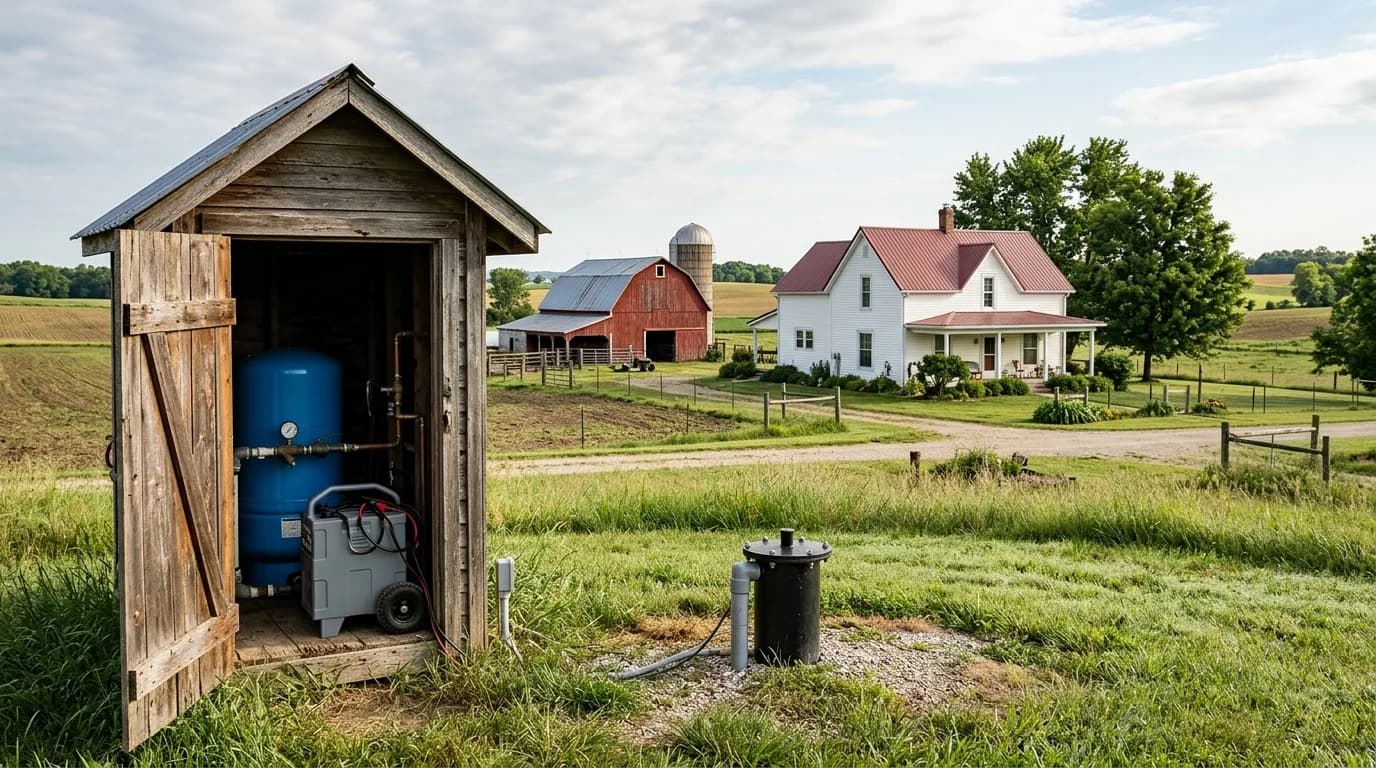
Almost every portable power station outputs 120V only. That runs a fridge, lights, a sump pump and a window AC, but not 240V loads: a deep-well pump, an electric dryer, an electric range or most central air systems. If you need those, buy a native 120/240V unit:
- BLUETTI Apex 300: 3,840W shared across 120V and 240V, about $1,499
- Anker SOLIX F3800 Plus: 6,000W at 120/240V, about $2,600
- EcoFlow DELTA Pro 3: 4,000W at 120/240V, about $2,799
EcoFlow DELTA Pro 3Check price on AmazonBuy at EcoFlow
5. They are heavy
Lithium iron phosphate (LiFePO4) cells are durable but dense. Typical weights: a 1kWh unit runs 23-28 lb, a 2kWh unit about 40-55 lb, and a 4kWh home unit over 100 lb. That matters if you plan to carry it to a campsite or up stairs. Wheeled designs such as the DELTA Pro 3 and F3800 Plus solve it for home use; for travel, a lighter unit you will actually take along beats a big one left in the garage. Our lightweight solar generator picks start at 7.5 lb.
6. High upfront cost per watt
Battery storage is expensive. A $2,799 DELTA Pro 3 holds 4.1kWh, about $680 per kWh; a $1,499 Apex 300 holds 2.76kWh, about $540 per kWh. A dual-fuel gas generator such as the EcoFlow Smart Generator 4000 costs $1,259 for 3,200W of continuous output and no storage at all. The solar generator earns the difference back only slowly in fuel savings, so buy for the loads you actually need to cover. Our best solar generator for the money ranking compares cost per usable kWh across every price tier.
7. They will not charge below freezing
Lithium batteries should not be charged below about 32°F (0°C), and most units block charging in the cold. They will still discharge, at somewhat reduced capacity. BLUETTI, for example, lists a charging range of 32°F to 104°F for the Elite 300 and Apex 300. If your unit lives in an unheated garage or cabin, keep it indoors or buy one that warms its own battery, such as the EcoFlow DELTA Pro Ultra. Our cold weather guide has the details.
Do solar generators wear out?
Yes, slowly. Makers rate LiFePO4 batteries by cycles to a set capacity: EcoFlow's DELTA 3 Plus is rated 4,000 cycles to 80%, Jackery rates most of its units 4,000 cycles to 70%, and BLUETTI rates the Elite 200 V2 and Apex 300 at 6,000+ cycles to 80%. Even at one full cycle a day, that is 11 years or more, and most owners cycle far less. Batteries also age with time and heat, so store the unit at 40-60% charge in a cool room if it will sit for months. Warranties run 5 years at Anker and on EcoFlow's DELTA 3 and DELTA Pro 3, 3 years plus 2 more with registration at Jackery and on some newer EcoFlow models, and 2 to 6 years at BLUETTI depending on the model. Our warranty comparison has the fine print.
What are the two main disadvantages of solar energy?
For solar power in general, the two that matter most are intermittency (no output at night, less under cloud) and the upfront cost of panels and storage. A solar generator inherits both: its battery solves intermittency for a while, and its price is the upfront cost.
The upsides that offset them
For balance: a solar generator is safe to run indoors (no carbon monoxide), quiet enough to sleep beside, needs no fuel storage or oil changes, switches on instantly as a backup supply, and can last a decade or more on a LiFePO4 battery rated for 3,000-6,000 cycles. For short outages, medical devices and apartments, those advantages usually outweigh the drawbacks above. See our home backup rankings for the units that handle them best.
Anker SOLIX F3800 PlusCheck price on Amazon
Frequently Asked Questions
What are the downsides of solar generators?
Limited stored energy (a 1kWh unit runs a full-size fridge about 14 hours), slow solar recharging, output that drops at night and in bad weather, 120V-only output on most models, weight, a high cost per watt and no charging below about 32°F. Each has a fix, such as more panels, a 120/240V model or a hybrid gas setup.
What is the biggest disadvantage of a solar generator?
Limited runtime. A solar generator can only deliver what its battery holds, roughly rated Wh x 0.85, while a gas generator runs as long as it has fuel. Sizing the battery for your essential loads, or pairing it with a gas or dual-fuel generator, solves most of it.
What is the biggest downside to solar electricity?
Intermittency. Panels produce nothing at night and much less under heavy cloud, often during the storms that cause outages. Storage covers the gap, which is why a solar generator should hold two to three days of your essential loads.
What are the two disadvantages of solar energy?
Intermittency and upfront cost. Solar output depends on sun and weather, and panels plus batteries cost more upfront than grid power or a gas generator, paying back slowly through avoided fuel or electricity costs.
Do solar generators work in cold weather?
They discharge in the cold at somewhat reduced capacity, but most will not charge below about 32°F (0°C). Store the unit indoors, or choose a model that heats its own battery, such as the EcoFlow DELTA Pro Ultra.
Can a solar generator run 240V appliances?
Most cannot; they output 120V only. Native 120/240V units such as the BLUETTI Apex 300, Anker SOLIX F3800 Plus and EcoFlow DELTA Pro 3 can run 240V loads like a well pump, within their output limits.