Can You Run a Generator Overnight? Gas vs Battery Safety (2026)
Table of Contents
Affiliate disclosure: Some links on this page are affiliate links, including links to Amazon, EcoFlow and BLUETTI. If you buy through them we may earn a commission, at no extra cost to you. As an Amazon Associate we earn from qualifying purchases. This never influences our rankings or verdicts.
You can run a generator overnight, but only outdoors, at least 20 feet from the house with the exhaust pointed away from doors, windows and vents, with working carbon monoxide alarms inside, and with enough fuel to last until morning, because you cannot safely refuel it while hot. A battery portable power station (solar generator) is the one backup that is safe to run indoors all night, silently, with no fumes.
Night is the riskiest time to run a gas generator: everyone is asleep, so a carbon monoxide leak can go unnoticed. A 2023 CPSC report links portable generators to an estimated 765 carbon monoxide deaths since 2009, 40% of all CO deaths tied to consumer products under its jurisdiction (CPSC). Below are the rules for running one all night safely, the fuel math, and the alternatives.
Are you allowed to run a generator all night?
In most places, yes; there is usually no law against running a generator overnight during an outage. What limits you is local: some cities and homeowners associations have noise rules or limits on generator use, which some relax during declared emergencies. Check yours before a storm, not during it. The bigger limits are safety and fuel, below.
Can you leave a generator running overnight? The safety rules
CPSC's guidance for portable generators (CPSC, May 2026):
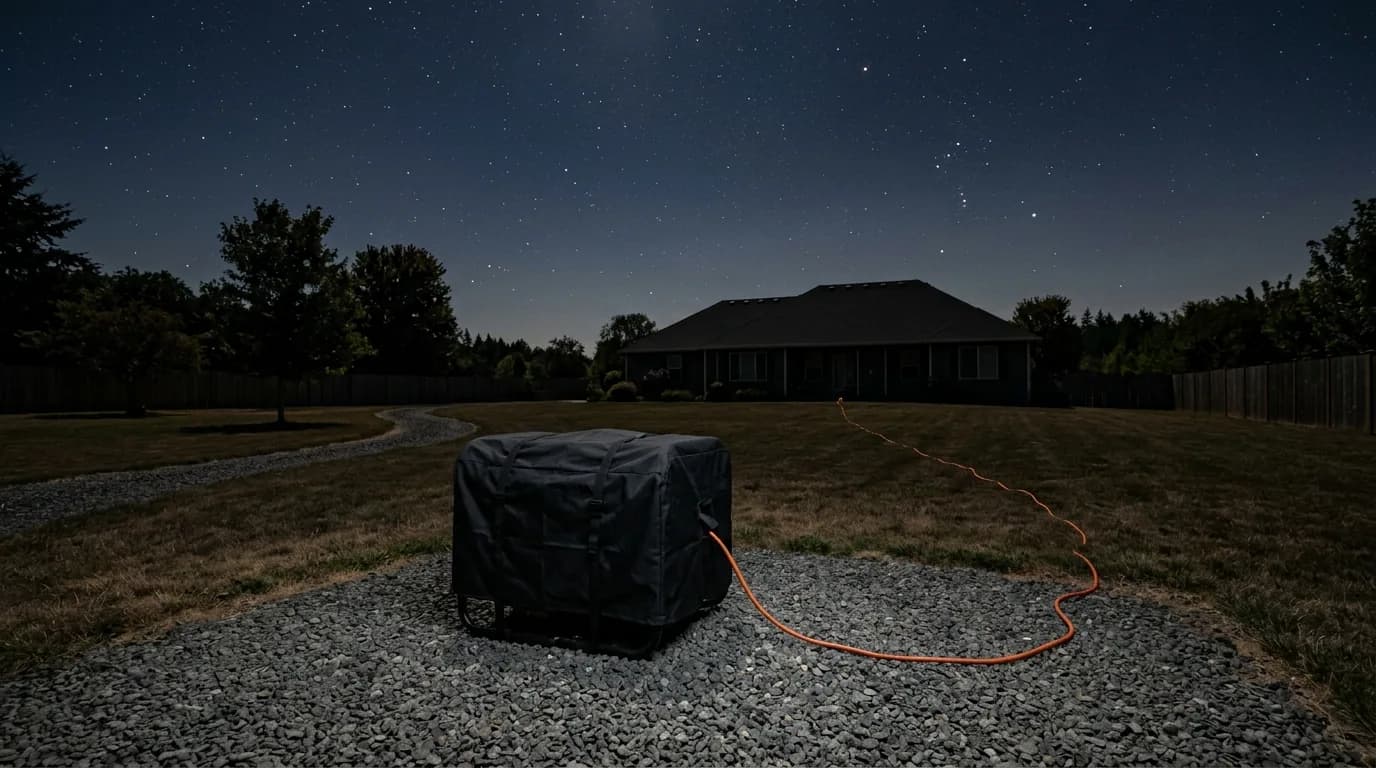
- Operate it outdoors only, at least 20 feet from homes and buildings, with the exhaust directed away from windows, doors and vents.
- Never run it inside a home, garage, basement, crawlspace or shed, even with doors or windows open.
- Install working CO and smoke alarms on every level and outside sleeping areas; CPSC also recommends interconnecting them. In an outage, only battery-powered alarms or hardwired ones with battery backup keep working.
Two more rules matter most at night. First, fuel it before dark and check the runtime: refueling a hot engine in the dark is a fire risk. Second, keep it dry without enclosing it; a purpose-made generator cover or tent is fine, a closed shed or carport is not. Newer generators with CO-sensing shutoff, such as Generac's COsense models, add a layer of protection but do not replace CO alarms indoors.
How to run a generator overnight safely: a bedtime checklist
- Fill the tank before dark, with the engine cold, and check the manual's runtime at your expected load.
- Place it 20 feet or more from the house on level ground, exhaust facing away from every door, window, vent and your neighbor's house.
- Route cords so nothing stays open. Do not leave a window or door cracked for a cord; that gap is how exhaust gets in. Use a cord rated for the load, through a purpose-made pass-through or under a door with a draft seal.
- Test the CO alarms on every level and outside bedrooms, and replace weak batteries.
- Trim the load: fridge, freezer, a fan or CPAP, the router. Switch off big heat loads that make it work hard all night.
- Never connect it to house wiring without a transfer switch or interlock. See our guide to connecting a generator to your house.
If anyone feels dizzy, nauseated or headachy, or the CO alarm sounds, get everyone outside into fresh air at once and call 911; carbon monoxide has no smell.
What is the 20/20 rule for generators?
It is the Louisiana Department of Health's 20-20-20 rule, a memory aid for portable generator safety it posted on September 1, 2021:
- 20 feet away from your home
- 20 minutes of cool-down before refueling
- $20 for a carbon monoxide alarm
The 20 feet matches CPSC's federal guidance, and the cool-down is why overnight running needs a full tank at bedtime: you cannot top it up at 3 a.m. without shutting it down and waiting.
How long will a 5000 watt generator run on a gallon of gas?
About two hours at half load. Generac's GP Series 5500-watt COsense portable (5,500 running watts) is rated for 10.5 hours at 50% load on its 5.4-gallon tank, or roughly 1.9 hours per gallon. At full load it burns faster, and at a light overnight load (a fridge, a fan and lights, well under 50%) it lasts longer. For a 10-hour night at half load, plan on about 5 gallons, nearly all of that Generac's 5.4-gallon tank.
| Load on a 5,500W generator | Approximate runtime per gallon |
|---|---|
| 50% (about 2,750W) | About 1.9 hours (from Generac's 10.5 hours on 5.4 gallons) |
| Light overnight load (fridge, fan, lights) | Longer than at 50%; Generac's page gives only the 50% figure, so check your manual for a 25% rating |
| Full load | Shorter than at 50% |
Fuel storage is its own risk: keep gasoline in approved cans, away from the house and the generator's exhaust. Our solar vs gas generator comparison covers running costs in more detail.
What can you run overnight on a generator?
Overnight loads are usually small: the fridge and freezer cycling, a CPAP, fans or an electric blanket, the router and phone chargers, together a few hundred watts. That is a light load for a 5,000W generator, which is good for fuel but means it runs at low efficiency for hours. It is also exactly the load a 2kWh battery handles silently, which is why the hybrid approach below makes sense. Avoid running space heaters unattended on generator power overnight; heating is the biggest load and a fire risk when no one is awake to watch it.
What generator can run 24 hours a day?
One with an unlimited fuel supply. A home standby generator connected to a natural gas line runs around the clock for days, within the maker's service intervals, and starts on its own; Generac puts a typical installation at $8,000 to $16,000, including the generator. Tri-fuel portables can also run from a natural gas hookup. Gasoline portables cannot run 24 hours without being shut down to refuel. Our Powerwall vs generator vs power station comparison weighs a standby unit against batteries.
The safer overnight option: a battery power station
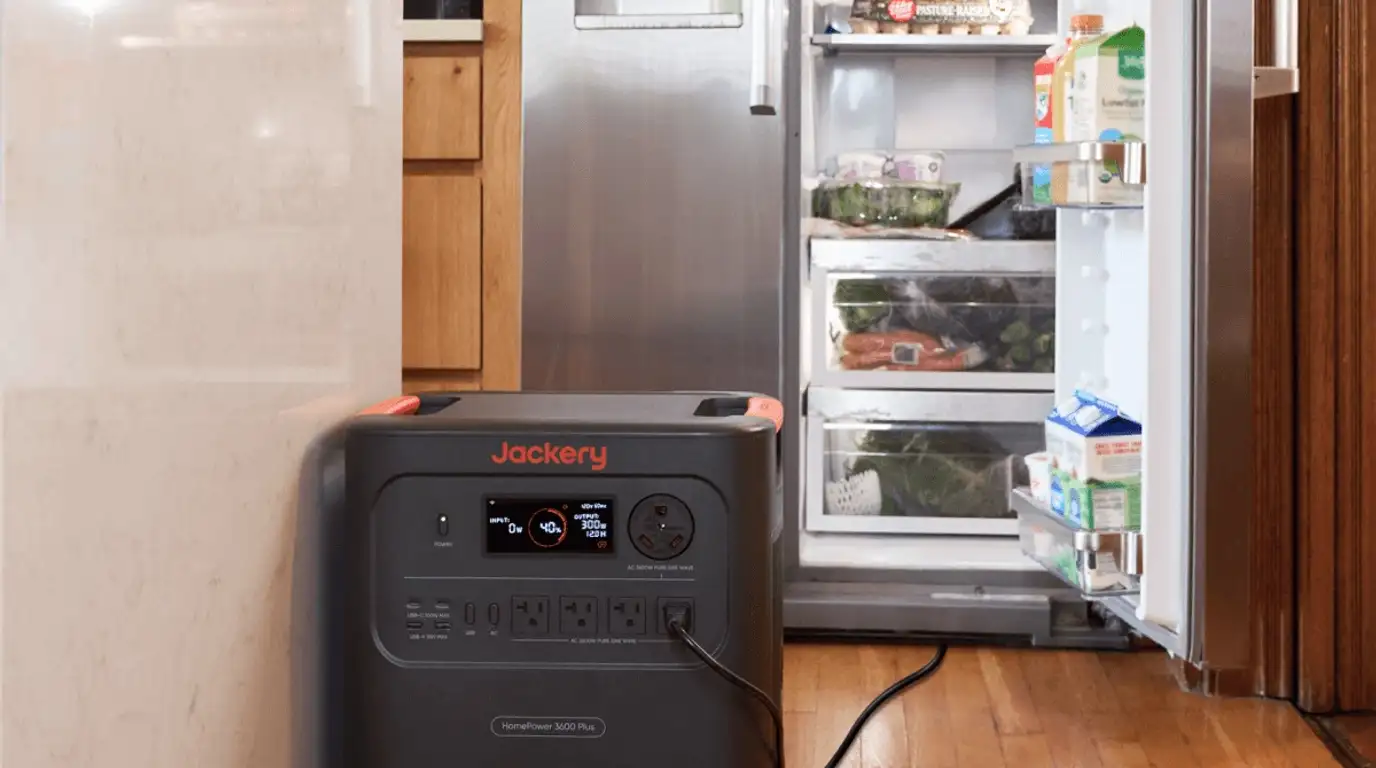
A power station makes no exhaust, so it can sit beside the bed. It is silent, switches on instantly, and needs no refueling. For a typical outage night, the energy needed is modest:
| Overnight load (10 hours) | Watts | Wh used |
|---|---|---|
| CPAP, no heated humidifier | 20W (ResMed: 8 to 20W) | 200Wh |
| 20-inch box fan on low | 56W | 560Wh |
| Wi-Fi router and modem | 20W | 200Wh |
| Full-size fridge (compressor cycling) | About 63W on average (ENERGY STAR median, 1.5kWh a day) | About 630Wh |
| Total | About 1,590Wh |
Divided by 0.85 for inverter losses, that is about 1,870Wh, so a 2kWh unit just covers the night. A heated humidifier takes the CPAP to 41 to 55W, roughly 200 to 350Wh more over 10 hours, so either skip it on outage nights or size up. The figures come from our appliance power guide, and our picks for CPAP users and power outages cover smaller and larger loads.
Two 2kWh units that fit, each $899 and sold by its maker on Amazon on October 26, 2026: the BLUETTI Elite 200 V2 (2,073.6Wh) and the EcoFlow DELTA 3 Max (2,048Wh).
BLUETTI Elite 200 V2Buy at BLUETTICheck price on Amazon
EcoFlow DELTA 3 MaxBuy at EcoFlowCheck price on Amazon
The hybrid: gas by day, battery by night
For multi-day outages, many households run the gas generator during the day, while they are awake to watch it and refuel it, and use it to recharge a power station. At night the generator goes off and the battery runs the bedroom, the fridge and the internet. That cuts generator run time, noise and fuel, and removes the overnight carbon monoxide risk entirely. Recharging is quick from a generator: EcoFlow rates the DELTA 3 Max at 0-80% in about 68 minutes from AC, so an hour or two of generator time in the afternoon refills a 2kWh battery for the night. EcoFlow's Smart Generator 4000 automates this, starting itself when a paired battery such as the DELTA Pro 3 or DELTA 3 Max Plus runs low (it charges the plain DELTA 3 Max too, but EcoFlow does not list that model for auto start). It burns fuel like any generator, so it gets the same 20-foot outdoor placement.
Frequently Asked Questions
Are you allowed to run a generator all night?
Usually yes; few places ban it outright during an outage, though some cities and HOAs have noise rules. Safety is the real limit: run it outdoors at least 20 feet from the house, with exhaust aimed away and CO alarms inside, and fuel it before bed.
Can you leave a generator running overnight?
Yes, if it is outdoors at least 20 feet from the house with the exhaust pointed away from doors, windows and vents, you have working CO alarms on every level, and it has enough fuel for the night. Never run it in a garage, shed or crawlspace, even with the door open.
What is the 20/20 rule for generators?
The Louisiana Department of Health's 20-20-20 rule: keep a portable generator 20 feet from your home, let it cool for 20 minutes before refueling, and spend $20 on a carbon monoxide alarm.
How long will a 5000 watt generator run on a gallon of gas?
About two hours at half load. Generac rates its 5,500W GP Series COsense portable for 10.5 hours at 50% load on a 5.4-gallon tank, about 1.9 hours per gallon. It runs longer at light loads and shorter at full load.
What generator can run 24 hours a day?
A home standby generator on a natural gas line, which can run for days within its service intervals, or a tri-fuel portable on a natural gas hookup. Gasoline portables must be shut down to refuel, so they cannot run continuously.
Is it safe to run a solar generator overnight indoors?
Yes. A battery power station produces no exhaust or carbon monoxide, so it can run beside the bed all night. A 2kWh unit covers a typical outage night of CPAP, box fan, router and fridge, about 1,600Wh before inverter losses.