EcoFlow DELTA 3 Series: Classic vs 3 vs Plus vs Max vs Ultra
Table of Contents
Affiliate disclosure: Some links on this page are affiliate links, including links to Amazon, EcoFlow and BLUETTI. If you buy through them we may earn a commission, at no extra cost to you. As an Amazon Associate we earn from qualifying purchases. This never influences our rankings or verdicts.
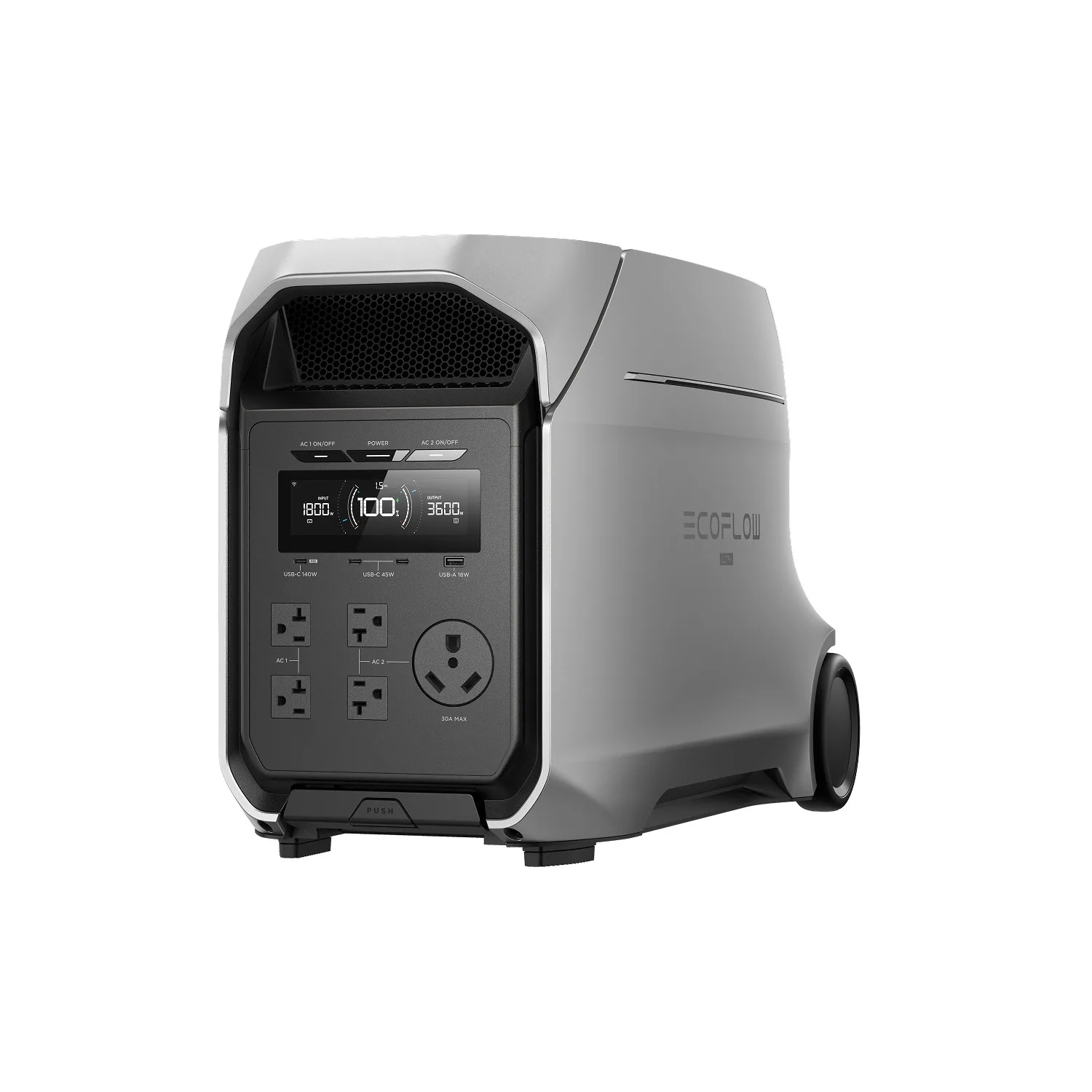
The EcoFlow DELTA 3 series is seven LiFePO4 power stations in three sizes: 1,024Wh (DELTA 3 Classic about $499, DELTA 3 $629, DELTA 3 Plus $719), 2,048Wh (DELTA 3 Max $899, Max Plus $1,199) and 3,072Wh (DELTA 3 Ultra $1,299, Ultra Plus $1,599). For most buyers the DELTA 3 is the best 1kWh pick, the Max Plus is the best value for home backup, and the Ultra Plus is the one for a transfer-switch system that grows to 11kWh.
The naming is the confusing part. Within each size, the Plus model is the one with more solar input, and in the Max and Ultra sizes it is also the only one that takes extra batteries. Among the 1kWh models, the Classic is the stripped-down one: same inverter, no expansion. This EcoFlow DELTA 3 series comparison uses EcoFlow's US product pages (checked September 29, 2026) for every spec and price. Prices change often, so treat them as approximate.
EcoFlow DELTA 3 series specs compared
| Model | Price (approx.) | Capacity | AC output (surge) | X-Boost | Max solar | Wall/fast charging | Extra battery | Weight | Stand-out ports | $ per Wh |
|---|---|---|---|---|---|---|---|---|---|---|
| DELTA 3 Classic | $499 | 1,024Wh | 1,800W (3,600W) | 2,600W | 500W | 0-80% in 45 min, 100% in 60 min (1,400W) | No | 26.7 lb | USB-C 100W + 30W, 1 USB-A | $0.49 |
| DELTA 3 | $629 | 1,024Wh | 1,800W (3,600W) | 2,200W | 500W | 100% in 56 min (1,500W) | Yes, to about 5kWh | 27.6 lb | 6 AC, 2 x 100W USB-C, car socket, 2 DC5521 | $0.61 |
| DELTA 3 Plus | $719 | 1,024Wh | 1,800W (3,600W) | 2,200W | 1,000W (2 x 500W) | 100% in 56 min (1,500W) | Yes, to about 5kWh | 27.6 lb | 6 AC, 2 x 140W USB-C, car socket, 2 DC5521 | $0.70 |
| DELTA 3 Max | $899 | 2,048Wh | 2,400W (4,800W) | 3,400W | 500W | 0-80% in 68 min (1,800W) | None listed (XT60 port only) | 44.8 lb | 4 x 20A AC, USB-C 100W, car socket | $0.44 |
| DELTA 3 Max Plus | $1,199 | 2,048Wh | 3,000W (6,000W) | 3,800W | 1,000W | 0-80% in 64 min (1,800W); 43 min with a Smart Generator 4000 | Yes, 2-10kWh | 48.7 lb | 4 x 20A AC, 140W USB-C, 30A Anderson | $0.59 |
| DELTA 3 Ultra | $1,299 | 3,072Wh | 3,600W (7,200W) | 4,600W | 800W | 0-80% in about 89 min (1,800W) | No | 72.1 lb | 4 x 20A AC + TT-30 (30A), 140W USB-C | $0.42 |
| DELTA 3 Ultra Plus | $1,599 | 3,072Wh | 3,600W (7,200W) | 4,600W | 1,600W | 0-80% in 48 min with solar + Smart Generator 4000 (3,960W); wall-only time not published | Yes, 3-11kWh | 74.3 lb | 4 x 20A AC + TT-30 (30A), 140W USB-C, 30A Anderson | $0.52 |
What every model shares: LiFePO4 (LFP) cells, 120V pure sine wave output, an automatic UPS switchover rated at 10ms or less, EcoFlow's app with Storm Guard or storm alerts and time-of-use scheduling, and a 5-year warranty (EcoFlow's newer pages specify 3 standard years plus 2 when you register in the app). Only the DELTA 3 and DELTA 3 Plus pages publish a cycle rating (4,000 cycles to 80%); the Classic, Max and Ultra pages give an estimated lifespan of about 10 years instead. The dollars-per-watt-hour column is simply price divided by capacity. Sources: EcoFlow's US pages for the Classic, DELTA 3, DELTA 3 Plus, Max, Max Plus, Ultra and Ultra Plus.
DELTA 3 Classic vs DELTA 3 vs DELTA 3 Plus: what is the difference?
These three are the most searched and the easiest to mix up, because they share the same 1,024Wh battery, the same 1,800W inverter with a 3,600W surge rating and nearly the same weight. The differences:
- Expansion: the DELTA 3 and Plus each take one extra battery (up to about 5kWh). The Classic takes none; its Amazon listing says it is not compatible with the DELTA 2 or DELTA 3 Series Smart Extra Batteries.
- Solar: the Classic and DELTA 3 accept 500W. The Plus has two 500W inputs for 1,000W.
- Ports: the DELTA 3 and Plus have 13 outputs including six AC outlets, a car socket and two DC5521 ports. The Plus's USB-C ports are 140W instead of 100W. The Classic lists one USB-A and two USB-C (100W and 30W), with no 12V outputs listed.
- Charging: the Classic reaches 80% faster (45 minutes) but 100% slightly slower (60 against 56 minutes).
- X-Boost: the Classic is rated higher (2,600W against 2,200W).
Rule of thumb: Classic if you will never expand, DELTA 3 if you might, Plus if you will run more than 500W of panels. Our full reviews: DELTA 3 Classic review, DELTA 3 review and DELTA 3 Plus review.
What is the difference between the DELTA 3 Max and DELTA 3 Max Plus?
Both hold 2,048Wh, but the Max Plus is the more complete machine for $300 more. The Max has a 2,400W inverter (4,800W surge, 3,400W X-Boost), 500W of solar input, a 100W USB-C port and a car socket, and it weighs 44.8 lb. EcoFlow's Max page lists no extra battery and notes the Max has only an XT60 port, so reverse charging and battery-preservation modes that need an XT150 or communication cable are not available. The Max Plus steps up to 3,000W (6,000W surge, 3,800W X-Boost), doubles solar to 1,000W, adds a 140W USB-C port and a 30A Anderson port for 12V gear (378W, shared with the car socket), and expands from 2kWh to 10kWh with up to two Smart Extra Batteries through EcoFlow's Smart Extra Battery Expansion Adapter. It also adds Smart Output Priority, which lets you choose from the app which circuits stay powered. The Max is the cheapest 2kWh in the series and the lowest cost per watt-hour; the Max Plus is the one to build a home backup system around. Our DELTA 3 Max review covers the 2kWh tier in more detail.
What is the difference between the DELTA 3 Ultra and Ultra Plus?
Both hold 3,072Wh, run a 3,600W inverter (7,200W surge, 4,600W X-Boost) and carry four 20A outlets plus a TT-30 30A RV outlet. Both support EcoFlow's X-Fusion bypass, which EcoFlow says keeps the full 3,600W available to your appliances while you are plugged into the grid or a generator, and both connect to a home circuit through a manual transfer switch or inlet box. The $1,299 Ultra takes 800W of solar, charges 0-80% in about 89 minutes at 1,800W, has no Anderson port and is not expandable (EcoFlow's footnote says so directly). The $1,599 Ultra Plus doubles solar to 1,600W, adds a 30A Anderson port and Smart Output Priority, expands from 3kWh to 11kWh with up to two Smart Extra Batteries, and can reach 80% in 48 minutes when solar and a Smart Generator 4000 charge together. Both weigh over 72 lb. Our DELTA 3 Ultra review has the details.
How long will each DELTA 3 model run a fridge, CPAP or window AC?
Runtimes use usable Wh = rated Wh x 0.85 (inverter and conversion losses) and runtime in hours = usable Wh / average load in watts. The expanded rows use EcoFlow's largest extra battery, the 4,096Wh DELTA Pro 3 Smart Extra Battery, which is how EcoFlow reaches its 5kWh, 10kWh and 11kWh ceilings.
The figures here use planning draws: a conservative 150W average for a full-size fridge (a new ENERGY STAR model averages closer to 63W, so expect longer runtimes) and a conservative 40W for a CPAP (ResMed's battery guide lists about 8 to 20W for an AirSense 10 with its humidifier off, measured through ResMed's 12V DC converter, so expect longer CPAP runtimes than shown, especially from a 12V outlet, and up to about 55W with the humidifier at its highest setting, or about 67W with a heated tube as well).
| Configuration | Capacity | Full-size fridge (150W) | CPAP (40W) | Window AC (450W) |
|---|---|---|---|---|
| Classic, DELTA 3 or DELTA 3 Plus | 1,024Wh | about 5.8 hours | about 21.8 hours | about 1.9 hours |
| DELTA 3 or Plus + 1,024Wh extra battery | 2,048Wh | about 11.6 hours | about 43.5 hours | about 3.9 hours |
| DELTA 3 or Plus + 4,096Wh DELTA Pro 3 extra battery | 5,120Wh | about 29.0 hours | about 109 hours | about 9.7 hours |
| Max or Max Plus | 2,048Wh | about 11.6 hours | about 43.5 hours | about 3.9 hours |
| Max Plus + two 4,096Wh extra batteries | 10,240Wh | about 58 hours | about 218 hours | about 19.3 hours |
| Ultra or Ultra Plus | 3,072Wh | about 17.4 hours | about 65 hours | about 5.8 hours |
| Ultra Plus + two 4,096Wh extra batteries | 11,264Wh | about 64 hours | about 239 hours | about 21.3 hours |
The pattern is simple: every 1kWh buys roughly six hours of a full-size fridge or about two hours of a small window AC. A 1kWh model handles an evening outage and a CPAP for two nights or more. A 2kWh model keeps a fridge going overnight. For a full day or longer without solar or a generator, you need expansion: a DELTA 3 or Plus with the large extra battery, or a Max Plus or Ultra Plus with extra batteries.
Which EcoFlow DELTA 3 should you buy?
DELTA 3 Classic: the lowest upfront price
About $499 buys the same 1,800W inverter and 1,024Wh as the DELTA 3, a one-hour wall charge and a 10ms UPS. It was the #1 seller in Amazon US's Portable Power Stations category when we checked on September 29, 2026. Buy it for apartment backup, a CPAP, camping or tailgating, as long as you are sure 1kWh is enough, because it cannot be expanded.
EcoFlow DELTA 3 ClassicBuy at EcoFlowCheck price on Amazon
DELTA 3: the best 1kWh model for most people
About $629 for 13 outputs, a 56-minute wall charge and one extra-battery port that accepts DELTA 3 Series, DELTA 2, DELTA 2 Max and DELTA Pro 3 packs. It replaced the DELTA 2 (EcoFlow's US store now forwards the DELTA 2 page to it), and it is the one to buy if there is any chance you will want 2kWh later.
EcoFlow DELTA 3Buy at EcoFlowCheck price on Amazon
DELTA 3 Plus: for solar-heavy 1kWh setups
About $719 for the DELTA 3 with two 500W solar inputs and 140W USB-C ports. Two 400W panels, one per input, can refill it in under two hours of strong sun. Worth the extra only in a van, RV, cabin or backyard setup with more than 500W of panels.
EcoFlow DELTA 3 PlusBuy at EcoFlowCheck price on Amazon
DELTA 3 Max: the cheapest 2kWh, with no upgrade path
About $899 for 2,048Wh and a 2,400W inverter with four 20A outlets, tied with the DELTA 3 Ultra for the lowest cost per watt-hour in the series, about $0.44. The trade-offs are 500W of solar, no extra-battery support and 44.8 lb in one piece. A good buy for keeping a fridge and a few essentials running overnight if you are sure you will never need more.
EcoFlow DELTA 3 MaxBuy at EcoFlowCheck price on Amazon
DELTA 3 Max Plus: the best value for home backup
About $1,199 for 2,048Wh, a 3,000W inverter, 1,000W of solar, a 30A Anderson port and expansion to about 10kWh. It runs heavier loads than the Max (a 3,000W inverter covers most single kitchen appliances), refills from solar in half the time, and grows with you. This is our pick for a household that wants fridge-plus-essentials backup today and a bigger system later.
EcoFlow DELTA 3 Max PlusBuy at EcoFlowCheck price on Amazon
DELTA 3 Ultra: for RVs that want a TT-30 outlet
About $1,299 for 3,072Wh, a 3,600W inverter and a TT-30 30A outlet that accepts an RV's 30A shore-power plug, at about $0.42 per watt-hour. EcoFlow's photos show it on wheels, but it weighs 72.1 lb, takes 800W of solar and cannot be expanded. Buy it if 3kWh is enough for good and the TT-30 matters.
EcoFlow DELTA 3 UltraBuy at EcoFlowCheck price on Amazon
DELTA 3 Ultra Plus: for a transfer-switch home backup system
About $1,599 for the Ultra's 3,072Wh and 3,600W inverter plus 1,600W of solar, a 30A Anderson port, Smart Output Priority and expansion to about 11kWh. Paired with a manual transfer switch or inlet box, it is the closest the DELTA 3 series gets to a home battery system. Buy it if you want to power selected household circuits through multi-day outages.
EcoFlow DELTA 3 Ultra PlusBuy at EcoFlowCheck price on Amazon
When should you skip the DELTA 3 series?
Every DELTA 3 model is a 120V station. If you need 240V for a well pump, dryer or central air handler, look at the EcoFlow DELTA Pro 3 or a dedicated home battery. If you mostly need something light for camping, even the Classic's 26.7 lb is more than you need, and a smaller station will serve you better. And if you are brand-agnostic, the 1kWh reviews above each compare a DELTA 3 model against its closest Jackery, Anker or BLUETTI rival.
The EcoFlow DELTA 3 Max Plus review covers the expandable 2kWh model in depth.
For the RIVER and DELTA Pro families alongside the DELTA 3 series, see every EcoFlow power station compared.
Frequently Asked Questions
What is the difference between the EcoFlow DELTA 3 and DELTA 3 Plus?
The DELTA 3 Plus has two 500W solar inputs (1,000W total) and 140W USB-C ports; the DELTA 3 has one 500W input and 100W USB-C. Everything else, including the 1,024Wh battery, 1,800W inverter, 56-minute wall charge and expansion to about 5kWh, is the same. The Plus costs about $90 more.
What is the EcoFlow DELTA 3 Classic?
It is the lowest-priced DELTA 3 model at about $499: 1,024Wh of LiFePO4, an 1,800W inverter (3,600W surge), 500W of solar input and a 60-minute wall charge. Unlike the DELTA 3 and Plus, it cannot take an extra battery.
Which EcoFlow DELTA 3 models are expandable?
The DELTA 3 and DELTA 3 Plus take one extra battery (up to about 5kWh), the Max Plus expands to about 10kWh and the Ultra Plus to about 11kWh. The Classic and Ultra are not expandable, and EcoFlow's Max page lists no extra battery.
What is the difference between the DELTA 3 Max and DELTA 3 Max Plus?
Both hold 2,048Wh. The Max Plus has a 3,000W inverter instead of 2,400W, 1,000W of solar instead of 500W, a 140W USB-C and a 30A Anderson port, and it expands to about 10kWh; the Max does not list any extra battery. The Max Plus costs about $300 more.
Which DELTA 3 model has a TT-30 RV outlet?
The DELTA 3 Ultra and DELTA 3 Ultra Plus. Both have four 20A outlets plus a 30A TT-30 outlet that accepts an RV's shore-power plug, backed by a 3,600W inverter and 3,072Wh of storage.
Do all EcoFlow DELTA 3 models work as a UPS?
Yes. EcoFlow rates every DELTA 3 model's automatic switchover at 10ms or less, which suits routers, network storage and most desktop PCs. None is a zero-gap online UPS.
What battery do EcoFlow DELTA 3 models use?
All seven use LiFePO4 (LFP) cells. The DELTA 3 and DELTA 3 Plus are rated for 4,000 cycles to 80% capacity; EcoFlow's pages for the Classic, Max and Ultra models give an estimated lifespan of about 10 years instead of a cycle count.
Which EcoFlow DELTA 3 is best for home backup?
For most homes, the DELTA 3 Max Plus: 2,048Wh, a 3,000W inverter and 1,000W of solar for about $1,199, expandable to about 10kWh. For circuit-level backup through a transfer switch, the Ultra Plus (3,072Wh, expandable to about 11kWh) is the step up.